

The loyalty collapse you don’t see. The campaigns look good. The conversions are steady. Your content engagement hasn’t dipped much.
But your customers? They’ve stopped recommending you.
That change doesn’t show up in Google Analytics or your revenue dashboard right away. It surfaces quietly in one metric that most marketing teams forget until it’s too late: the net promoter score (NPS).
A drop in NPS is like a small crack in the hull of a ship, invisible at first, but deadly if ignored. By the time churn increases or referrals vanish, the damage has already spread through customer sentiment and brand reputation.
What makes an NPS collapse so dangerous is how easy it is to overlook. You can have record‑high ROI and still be bleeding loyalty. You can launch new campaigns but feel retention rates slide without explanation.
Behind those numbers is an emotional truth: customers no longer feel loyalty strong enough to speak for your brand.
Why marketing teams should care about NPS
In most organizations, NPS isn’t just a customer experience metric, it’s a marketing metric in disguise.
Three truths to remember:
- NPS is a predictor of revenue stability: A sustained 10‑point drop can precede churn increases of 5–7 %.
- It’s the simplest external reputation index: Investors and partner brands use NPS trends as shorthand for future growth sustainability.
- Marketers control = 70 % of its inputs: Message tone, timing, relevance, and responsiveness all come from marketing processes.
At enterprise and agency levels, NPS might appear in quarterly executive decks, but the mid‑level marketers, the CRM specialists, digital managers, and lifecycle strategists are the ones closest to the triggers behind those numbers. They write the emails, plan the lifecycle journeys, and manage the campaigns designed to deepen relationships.
For in‑house marketers:
- An NPS decline means a customer promise vs delivery gap. Your messaging drew customers in, but the post‑purchase experience didn’t meet expectations.
- It indicates intent erosion. Repeat purchase velocity slows, advocacy stops, and referral channels dry up.
- It becomes a warning that your next set of campaigns will need higher acquisition spend to offset trust loss.
For agencies:
- A low or declining NPS among client accounts touches everything. Renewals, reputation, margins. If your clients’ customers don’t feel loyal, your agency becomes the silent scapegoat.
- Ignoring NPS drop‑offs is like treating customer experience as someone else’s responsibility. In reality, it’s marketing’s first line of defence against attrition.
Net promoter score: The real meaning behind the number
Net promoter score (NPS) measures a customer’s likelihood to recommend your brand to others. The ultimate proxy for loyalty. It distils thousands of interactions into one emotional equation:
The question is simple:
“On a scale of 0–10, how likely are you to recommend our company to a friend or colleague?”
The calculation, however, reveals your brand’s health in a way few other metrics can.
NPS = % Promoters – % Detractors
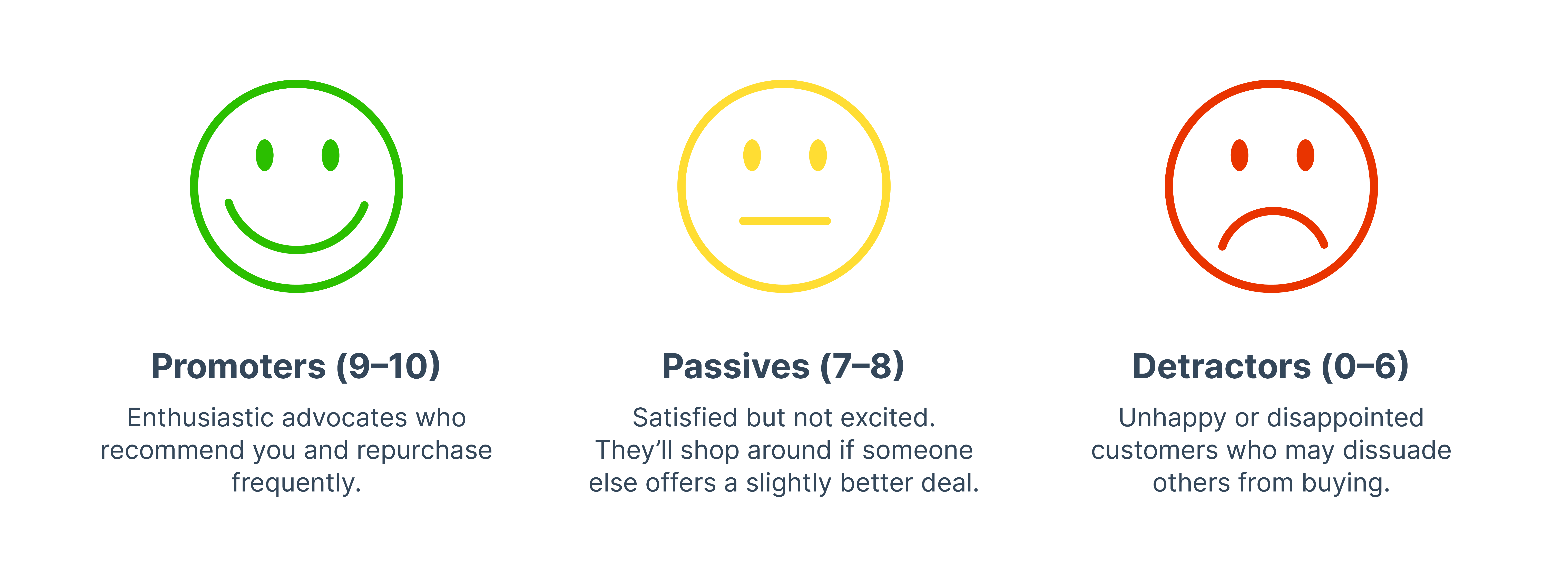
- Promoters (9–10): Enthusiastic advocates who recommend you and repurchase frequently.
- Passives (7–8): Satisfied but not excited. They’ll shop around if someone else offers a slightly better deal.
- Detractors (0–6): Unhappy or disappointed customers who may dissuade others from buying.
Benchmarks illustrate expectations:
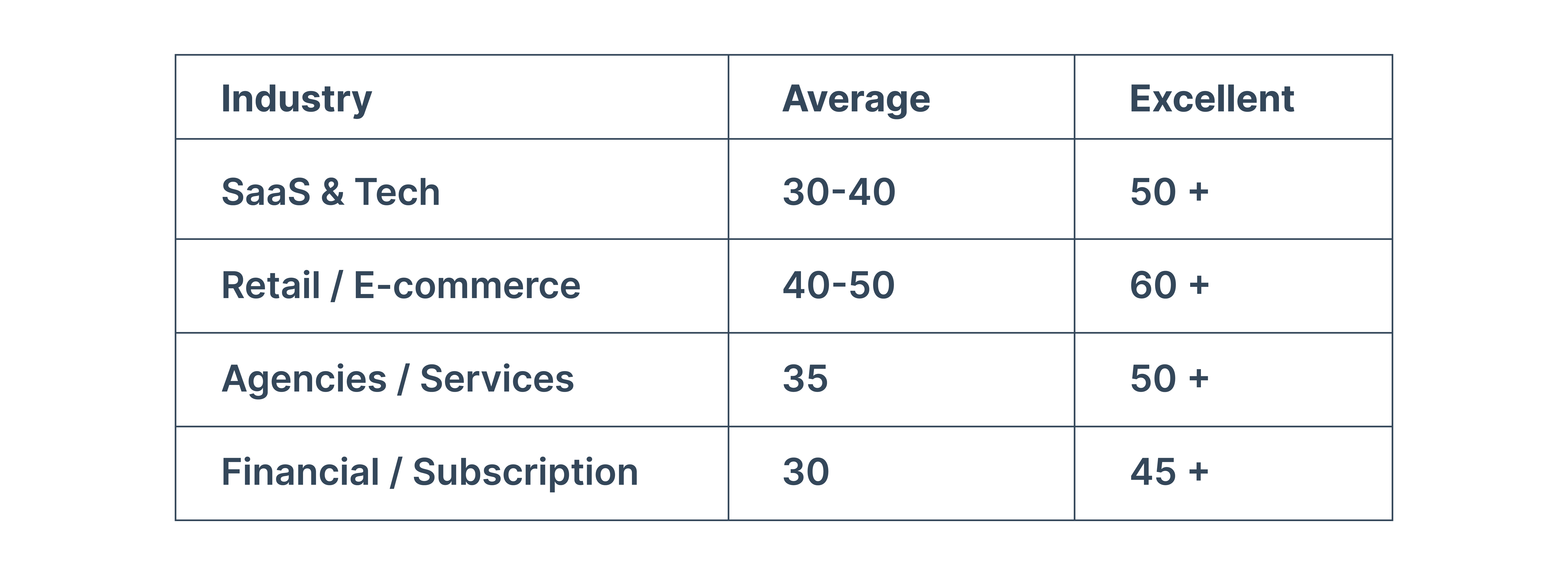
Anything negative is urgent; anything below industry average deserves investigation. Yet many brands look only at quarterly snapshots instead of segment trends. Every 10‑point drop in NPS can translate to a meaningful hit in customer retention, advocacy, and organic growth.
The metric isn’t about satisfaction; it’s about sentiment. What customers are willing to say about you publicly. When NPS goes down, marketing confidence should go up because it’s a signal you can act on while there’s still time to repair.
The silent causes behind NPS drop‑off
Most NPS declines don’t come from major failures; they come from dozens of smaller, systemic oversights that spread across marketing and operations. Here are the biggest contributors, and how mid‑level marketers can identify and fix them before loyalty erodes further.
1. Disconnected pre and post‑purchase experience
Acquisition messaging promises convenience, personalization, or speed that doesn’t materialize after payment. Customers experience friction immediately after conversion and reward you with silence instead of praise.
Strategic consequence: Customers feel misled. Trust diminishes at the moment they realize the brand experience doesn’t align with pre‑purchase messaging.
Fix it:
- Audit your content and onboarding flow together.
- Ensure marketing promises match actual delivery steps.
- Include post‑purchase journey alignment in campaign planning, not as a separate initiative.
2. Slow or unresponsive customer support
Support delays are loyalty killers. Customers expect omnichannel responsiveness, not 24 hours later via an automated “we’ll get back to you” message. Detractors grow where communication stalls. Most drops in NPS traces back not to bad service but to late service.

Source: Emarsys
Strategic consequence: Each unresolved query lowers perceived value. Detractors multiply, pulling NPS down faster than any campaign can offset.
Fix it:
- Feed NPS data directly to support leadership.
- Create closed‑loop feedback workflows where promoters are acknowledged, and detractors receive outreach within 48 hours.
- Monitor average response time alongside NPS trends for correlation insights.
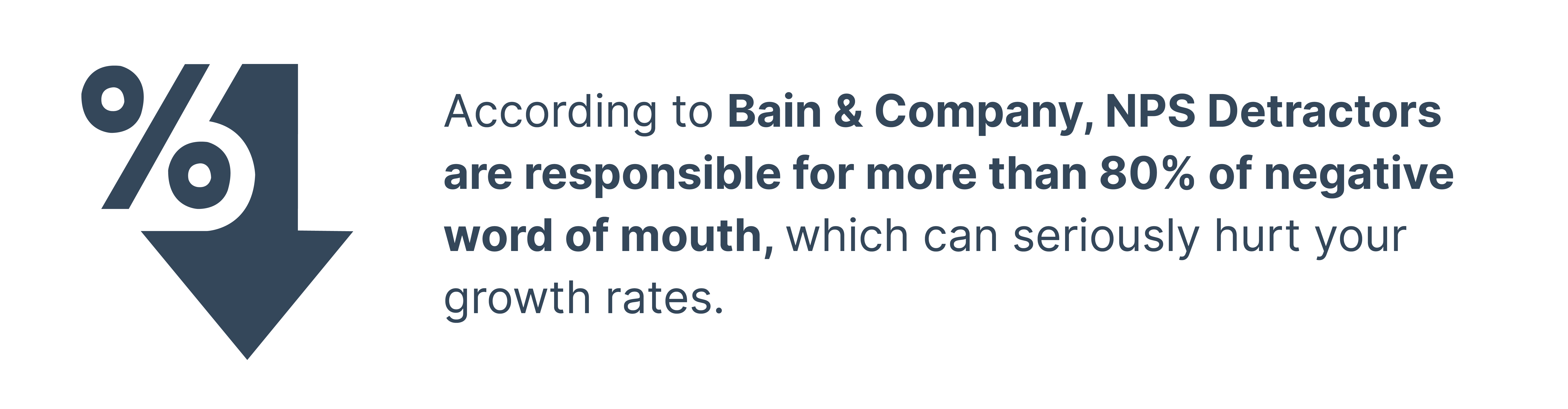
Source: Survicate
3. Tone‑deaf messaging and post‑sale communication
Email and remarketing campaigns use generic content, missing the chance to nurture emotional connection. Saying “Thanks for your purchase!” isn’t the same as showing genuine brand personality or gratitude. Retention content that sounds robotic signals emotional absence. Post‑sale email flows built on generic templates underperform because they don’t acknowledge context.
Strategic consequence: Customers feel the conversation ends after checkout, meaning engagement stops being two‑way.
Fix it: Segment communication flows intelligently.
- Promoters → reward and recognition emails.
- Passives → loyalty engagement.
- Detractors → customer recovery content that addresses pain points directly.
Integrate NPS cohort data with marketing automation for personalized campaigns.
4. Lack of personalization in retention content
Retention teams rely on batch campaigns offering the same discount and the same message for everyone. Batch‑and‑blast still dominates loyalty programs. When everyone receives the same 10 % code, only the margin declines.

Source: Emarsys
Strategic consequence:
- Customer connection feels impersonal; passives slide toward detractors.
- Lack of personalization makes NPS drop-off inevitable because loyalty thrives on relevance.
Fix it:
- Use purchase history and engagement data to craft individualized retention experiences.
- Recommendation engines and dynamic content modules improve brand affinity and repeat rate.

Source: Emarsys
5. Ignoring passive respondents as “neutral”
Passives sit between love and indifference. Many churn quietly because the brand never checks in, assuming “neutral” equals safe. Survey analysis often focuses only on promoters and detractors, treating passives (7–8) as harmless.
Strategic consequence: Passives are silent churn risks. They are satisfied but disconnected. They rarely participate in loyalty programs and rarely advocate for your brand.
Fix it:
- Segment passives for proactive engagement.
- Invite feedback on what would make them promoters and implement quick wins, whether it’s better UX, faster delivery, or surprise value gestures.
6. Survey fatigue or poor timing of NPS collection
Sending NPS forms immediately post‑checkout captures transactional emotion, not product experience. Frequent surveys cause annoyance, reducing response quality. NPS surveys are sent too often or at irrelevant moments (e.g., immediately post-purchase, before product use).
Strategic consequence: Survey response rates drop; sentiment data skews toward extremes, lowering reliability.
Fix it:
- Align NPS survey timing with meaningful customer milestones e.g. product delivery, onboarding completion, or post‑support resolution.
- Sample small cohorts regularly instead of hitting the entire customer base at once to maintain feedback quality.
- A drop in NPS isn’t only a statistical problem; it’s an emotional measure of brand decay.
- Treat it as an early warning, not retrospective reporting.
Hypothetical case study: The loyalty gap
A fast‑growing wellness subscription brand invests heavily in acquisition. Campaigns bring steady new users; monthly revenue looks great.
Then quarterly reports reveal a problem: NPS fell from +52 to +26 in six months.
Investigation shows:
- Onboarding emails were identical for new and returning customers.
- Support responses averaged 36 hours.
- Personalization stopped after the first order.
Retention dropped 18%, referral traffic shrank by half, and customer satisfaction surveys mirrored the NPS slide.
What happened: Marketing treated acquisition growth as loyalty proof. They missed declining customer confidence until advocates became passive.
By the time churn became visible, repairing brand sentiment required extensive resources and a full customer experience overhaul.
Lesson: Measuring loyalty is as important as driving conversion. NPS gives marketers time to act if they pay attention early enough.
Strategic & practical takeaways for marketers
Customer sentiment is fluid; measuring it continuously lets you pivot before advocacy falters.
- NPS is your loyalty KPI, not your customer support KPI: Treat it as part of marketing’s responsibility. The brand promise starts with the first click. If it breaks later, loyalty dies there.
- Integrate NPS feedback loops with campaign data: Sync NPS inputs with CRM and marketing automation tools to build audience segments by sentiment. Detractors need reassurance; promoters deserve advocacy programs.
- Report NPS by segment, not just average: Break it down across acquisition sources, regions, customer lifecycle stages, and channels (email, app, retail). Real insight comes from where scores differ most.
- Embed loyalty metrics into attribution dashboards: Track NPS alongside repeat purchase rate, referral volume, and customer engagement scores for holistic performance evaluation.
- Educate cross-team alignment: Ensure marketing, product, and support teams share definitions of “customer satisfaction.” Survey meaning and timing must align across departments.
- Benchmark constantly: Use industry NPS averages as reference points, but focus on relative improvement. A +40 score may be average for retail but exceptional for B2B SaaS.
Let Hurree connect every NPS insight to the metrics that drive brand loyalty
NPS data without context is just a number. Hurree gives marketing teams the ability to see why that number moves.
By connecting your surveys, CRM, and analytics data into a unified dashboard, Hurree turns loyalty feedback into actionable strategy.
With Hurree, you can:
- Centralize customer sentiment data from NPS, CSAT, and CRM platforms.
- Segment promoters, passives, and detractors automatically and link their feedback to purchase and engagement metrics.
- Visualize loyalty trends across products, campaigns, and customer segments.
- Create benchmark indicators highlighting when NPS dips below benchmarks, prompting immediate action.
- Share insight dashboards with teams or clients to prove the relationship between NPS improvement and ROI growth.
Hurree helps marketers defend retention budgets with real data, act fast on sentiment changes, and elevate campaigns that build connection, not just conversions.
On a concluding note
Loyalty rarely disappears overnight. It fades when brands stop listening.
Every NPS decline is an opportunity disguised as a warning. It tells you exactly where trust is wearing thin and invites you to fix it before the relationship ends.
Mid‑level marketers are closest to those signals. Your campaigns, automations, and personalization engines shape how customers feel after they buy.
Listening doesn’t just rebuild loyalty, it protects revenue.
Don’t wait for detractors to define your brand. Measure sentiment, connect insights, and act decisively.


Share this

Measuring Content Marketing Success: Essential Metrics to Track

How to Build the Perfect Customer Retention Campaign
.png)